


1 october 2012 - 12 april 2013
The park
Monday to Sunday: 11am to 4pm.
Palace, Exhibitions, Palace Shop, Sofieros Glass Veranda and Café
Closed.
Sofiero Restaurant
Visit sofieroslottsrestaurang.se for restaurant opening hours.
13 april – 15 september 2013:
The park
Monday to Sunday: 10 am to 6 pm
Palace and Exhibitions
13 April - 13 May 11 am to 4 pm
14 May - 31 August 10 am to 6 pm monday to friday and 11 am to 4 pm saturday and sunday
1 September - 13 September 11 am to 4 pm
Admission (April 13 to September 15 2013)
(For events with increased admission fees, please see paragraph below)
Adults 100 SEK
Children and youth (0-18 years) in company of adults: free admission
Season ticket (Sofiero season ticket or Kulturkortet): free admission
Increased admission for the events listed below:
Applies to The Rhododendron Days (25-26 may) and The Garden Party (23-25 august).
Adults 120 SEK
Pensioners 120 SEK
Children and youth in company of adults: 0-11 years free admission, 12-18 years 30 SEK
Season ticket (Sofiero season ticket or Kulturkortet): free admission
Please note:
The admission information listed above does not apply to concerts and events with advance booking. Please see the program page, which is continuosly being updated with this year's happenings, for more information on where to buy tickets for these events.
Contact us
Tel. +46 (0) 42-10 25 00
info[at]sofiero.se
Practical information
- Wheelchairs and small carts are subject to availability (no advance booking). Please ask at the entrance.
- Dogs on leashes are welcome. Owners must ensure they pick up after their dogs.
- Bring a picnic with you and find a lush spot in the park. Barbecuing is not allowed.
- It is not allowed to bring your own chair to concerts. There are a few chairs available at the entrance. If you must bring a chair of medical needs, you have to bring a doctor's certificate.
Season tickets
In Helsingborg for a weekend between April and September? A Two-day Culture Pass will save you entrance fees not only at Sofiero, but also at Helsingborg Castle Kärnan, Fredriksdal Museums and Gardens and Dunkers Cultural Centre in Helsingborg (125 SEK).
In Helsingborg for longer than a weekend? Get the regular Culture Card (Kulturkortet). It has the same benefits as the 2-day Culture Pass (see above) but lasts for a whole year (395 SEK). Learn more: http://mittkulturkort.se/?page_id=1030
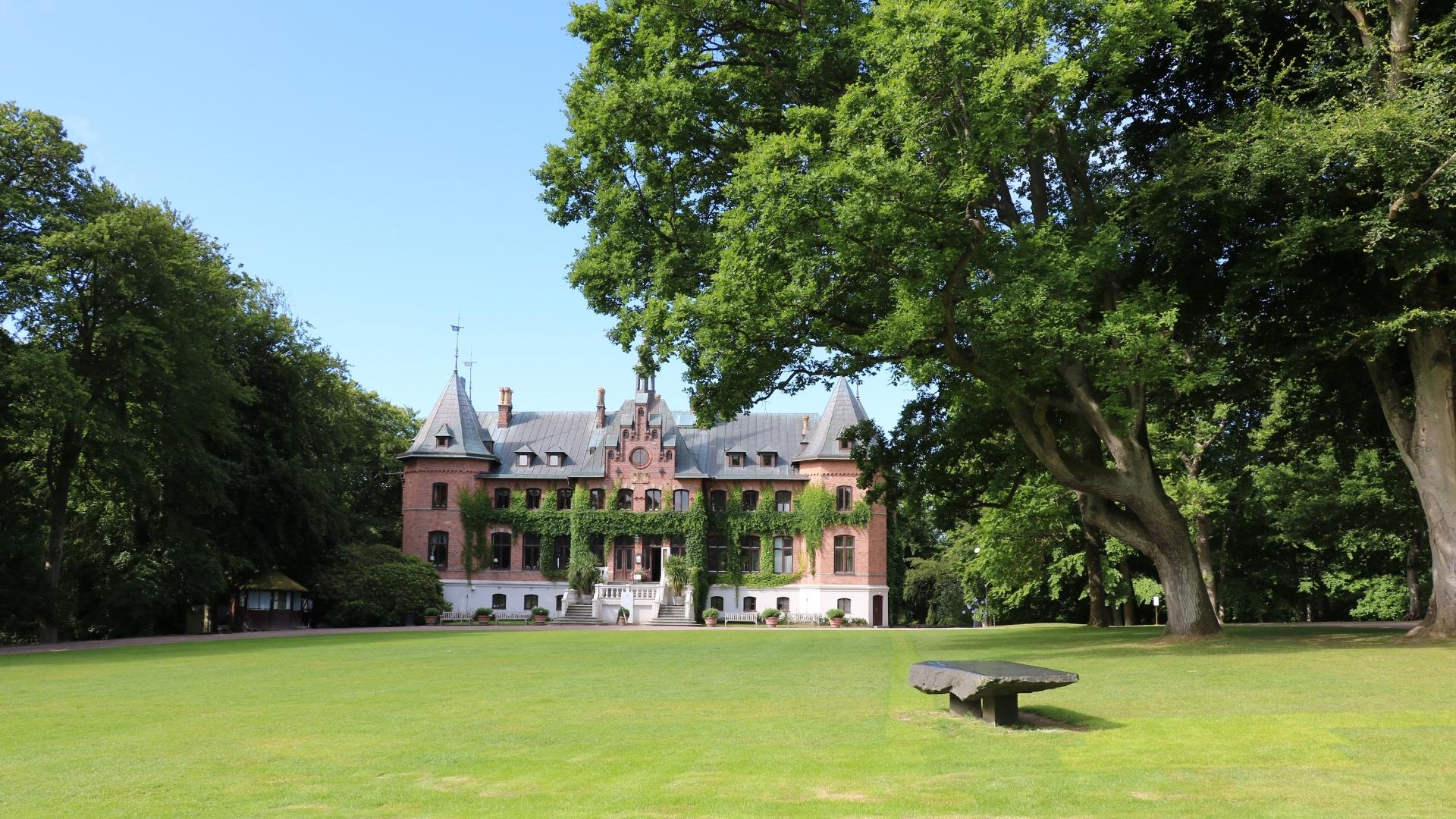
Sofiero Palace built in 1864
In 1864, Crown Prince Oscar and his wife Sophia bought Skabelycke farm, just north of Helsingborg, in order to build their summer residence there. The palace was completed the following year but had a different appearance then, only being one storey high. Between 1874 and 1876, when Crown Prince Oscar had ascended the throne, the palace was renovated and took on its present exterior.
Sofiero, a wedding gift
In 1905, when the Swedish-Norwegian union was dissolved, Oscar II gave the palace as a wedding gift to his eldest grandchild, Prince Gustaf Adolf and his wife Margareta. The palace was in need of renovation and this was duly carried out. Walls were knocked down and the dark colours were changed to give the palace a brighter, lighter atmosphere.
Queen Louise
Crown Princess Margareta died an early death in 1920 and Crown Prince Gustaf Adolf remarried, with Lady Louise Mountbatten, becoming King in 1950.
With the same enthusiasm that Margareta had put into the gardens, Louise took an interest in the people of Sofiero as well as its neighbours. She was a very popular figure with everyone.
The palace gardens
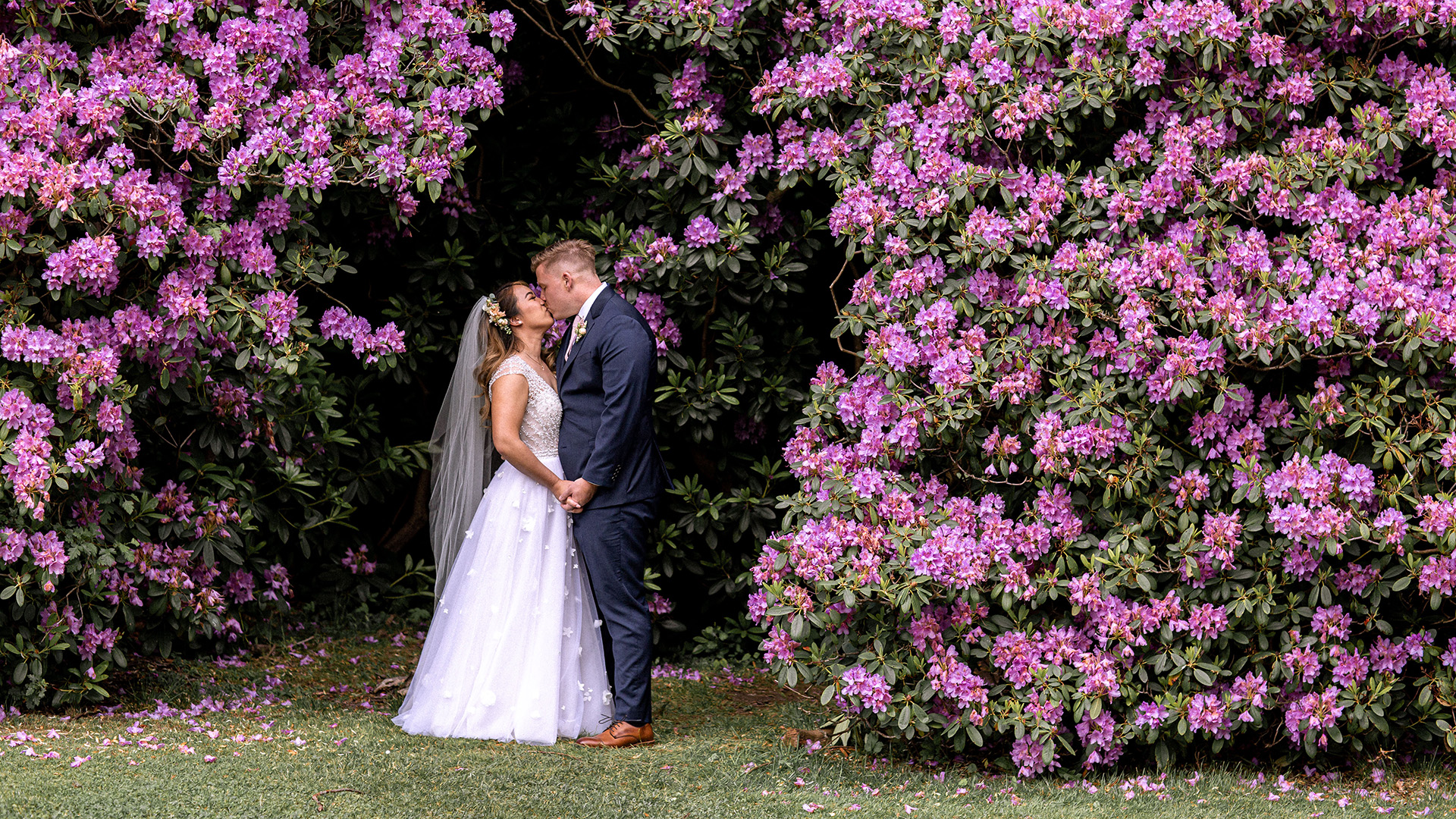
The Crown Prince and Princess, Margareta and Gustaf Adolf, started to plan, sketch and start the work on the grounds around the palace. Gustaf VI Adolf loved his summer residence and spent considerable time and effort on cultivating his interest for rhododendrons. It is his collection of rhododendrons in particular that have given the palace gardens such a name.
Sofiero has the ideal conditions for rhododendrons. The gullies, to the north and south of the Palace, are sheltered and have a good combination of light and shade. There is a low pH, the earth is porous and well drained. Sofiero’s first rhododendrons were planted in 1907, with new shrubs still being planted. On the old king’s death in 1973, there were about 5,000 plants and almost 500 different types of rhododendron in the park. This number has now grown to over 10,000 plants.
The planting of rhododendrons can be divided into four phases.
The first phase involves Crown Princess Margareta’s intellectual heritage and contacts from her home country, England. Sofiero’s first rhododendrons were planted in 1907, with the plants coming from her childhood home, Bagshot Park. These now form magnificent groups, with heights of up to eight metres.
The second phase started in the 1930s, when Crown Prince Gustaf Adolf started his collection of rhododendrons. Right up until his death, the garden included a nursery. Here there were greenhouses, a large number of hot and cold beds, and a shade hall. Plants were brought on here from seeds or cuttings. Every year, up to forty different kinds of rhododendron seeds were sown, then to be cared for in the nursery for almost ten years before being planted out in the borders. Much exchanging was done with, for instance, Gothenburg Botanic Garden, Kew Gardens in London, Edinburgh Botanic Garden and Windsor Great Park. Not only seeds and cuttings were exchanged, but also ideas and experience.
The third phase started in the 1940s, when the hard winters of the war years took their toll on the Sofiero plants. After the war, the king put much energy into filling the gaps with new rhododendrons. Nurseries in both England and Germany contributed many valuable plants.
In Professor Bertil Lindquist’s thesis The Rhododendrons at Sofiero, he writes about the king: “His majesty himself organised the acquisition and care of all the material and also planned the planting process. Registration of the plants was done in the king’s own hand. His rhododendron card index demonstrates meticulous regard to detail. Not only the origin of incoming material was registered, but also blooming, fruit-setting and the continuing fate of the seed material.”
The fourth phase started in the 1980s, with new contacts such as Glendoick Nursery in Scotland and Hans Hachmann in Germany. They have contributed numerous plants to Sofiero’s modern range.
Scandinavian collections from the Yunnan province in Southern China have come to Sofiero thanks to contacts with different institutions and private individuals. In 2005, material from the KGB (Kunming-Gothenburg Botanical expedition) of 1993 was donated. With the planting done in the jubilee year, Sofiero continues to test new rhododendrons for our climate.